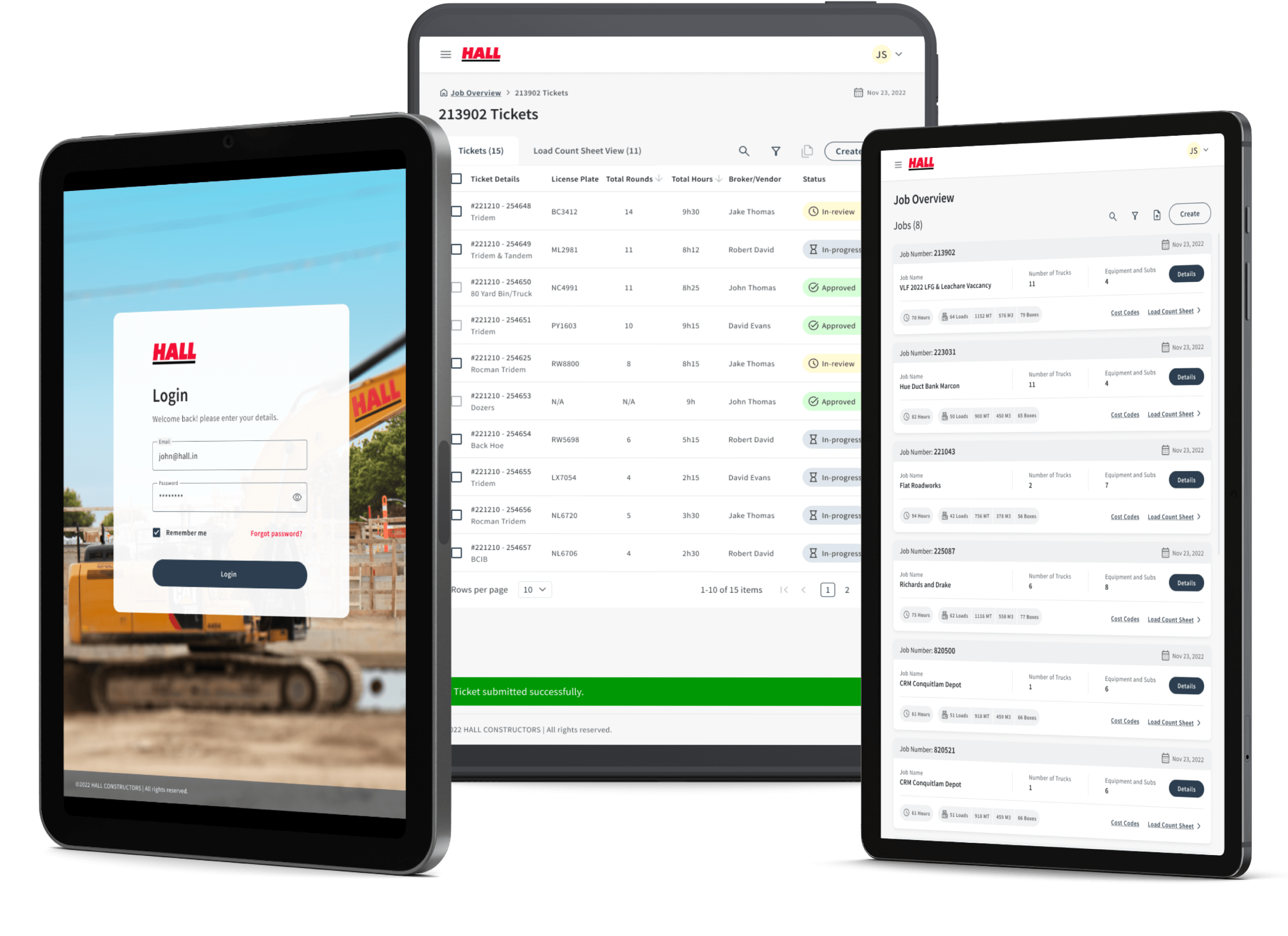
the brief.
Hall Constructors ran truck load management on paper: forms that got lost, smudged, and miscounted, turning into billing errors and invoicing delays. They needed a rugged, genuinely easy digital system foremen would adopt in real construction conditions, one that accounted for outdoor glare, weather, and short training windows.
And it had to overcome something harder than any of that: the memory of a previous digitization attempt that had failed on usability.
the challenge.
Adoption was the whole game. Foremen working in dust, rain, and bright sun had already been handed a digital tool and rejected it, so the bar wasn't "build an app," it was "build the one they won't abandon." That meant designing for the worksite first and the screen second: high-contrast displays readable in direct sun, controls usable with work gloves, and workflows fast enough to beat reaching for a pen.
the process.
We started with the people, despite limited early access to foremen: interviewing stakeholders to pull out the functional must-haves, then building Figma prototypes around high-contrast screens, large touch targets, and stripped-down workflows. Critically, we tested those prototypes hands-on with foremen on iPads, in bright sunlight and rough conditions, and ran the feedback straight back into the design. Later phases put working versions on real job sites for final adjustments before launch, and we built a UI/UX design system so the app could grow without fragmenting.


the solution.
a field-ready ticketing system.
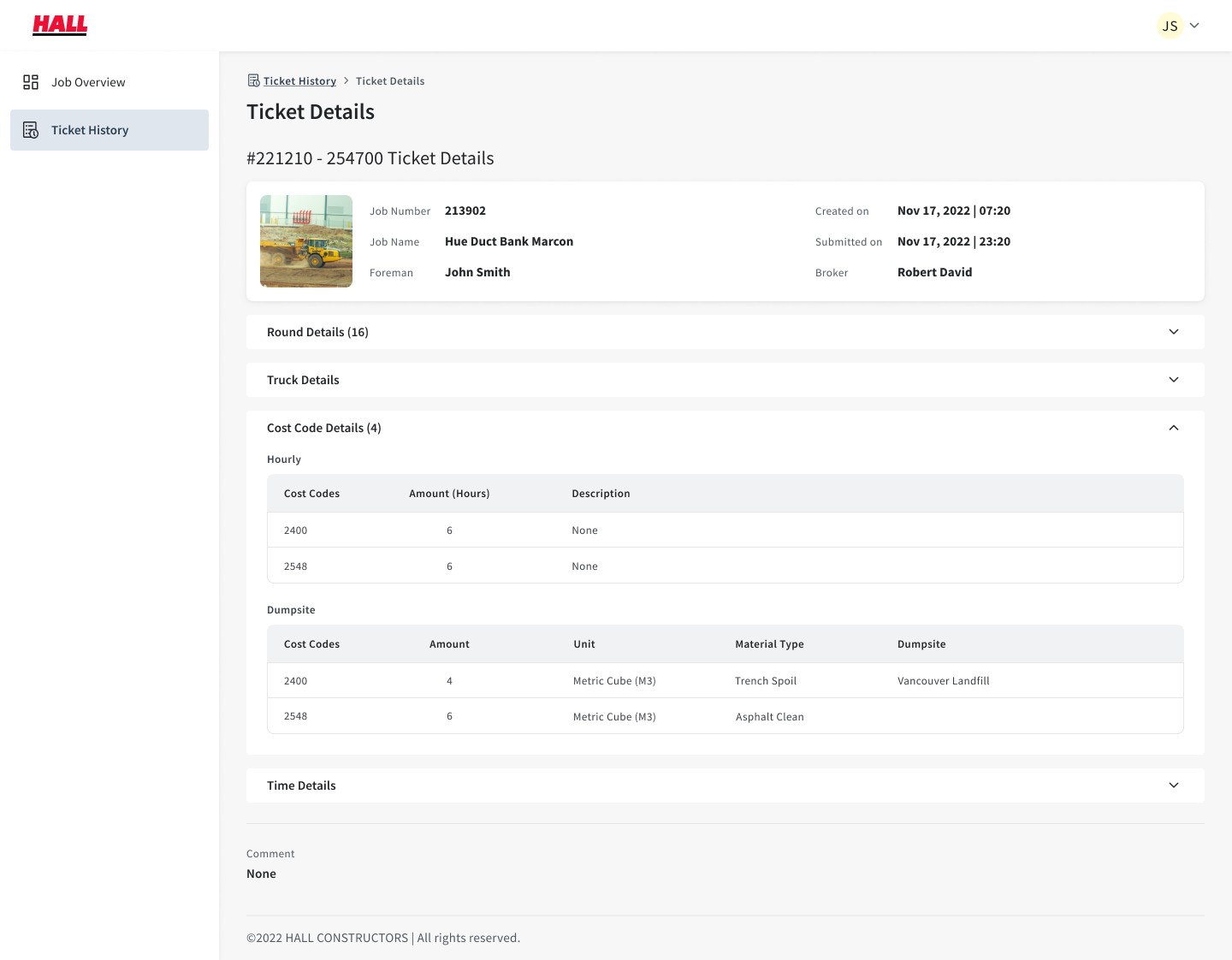
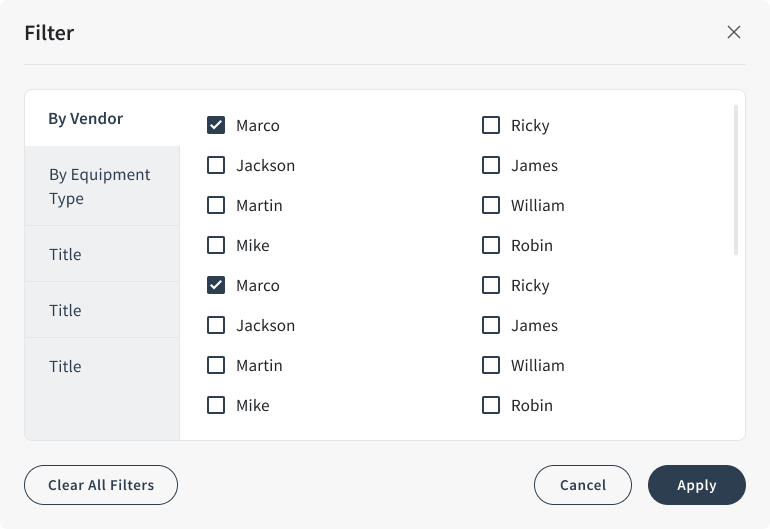
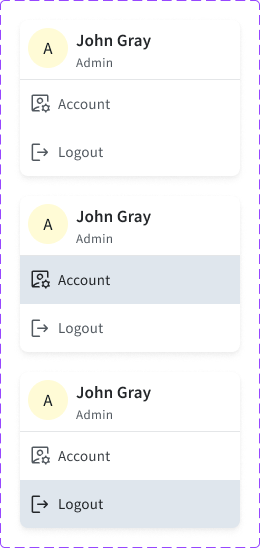
We built a rugged, intuitive digital ticketing system for truck load management: high-contrast and easy to navigate on iPads, designed for the conditions it actually lives in. Data is captured digitally at the source, enabling near real-time reconciliation and faster invoicing, and a scalable design system keeps future features consistent.
the outcome.
The system is in use by the foremen who rejected the last one, adoption after a prior failed attempt being the metric that matters most here.
By capturing data digitally at the point of work, an entire class of errors structurally disappears: lost paper tickets and illegible handwriting can't corrupt invoicing when the count is recorded at source, which is what closes the gap between work done and work billed.
The ticket in the truck: dust, glare, gloves, and the count captured at the source.
Hover to play