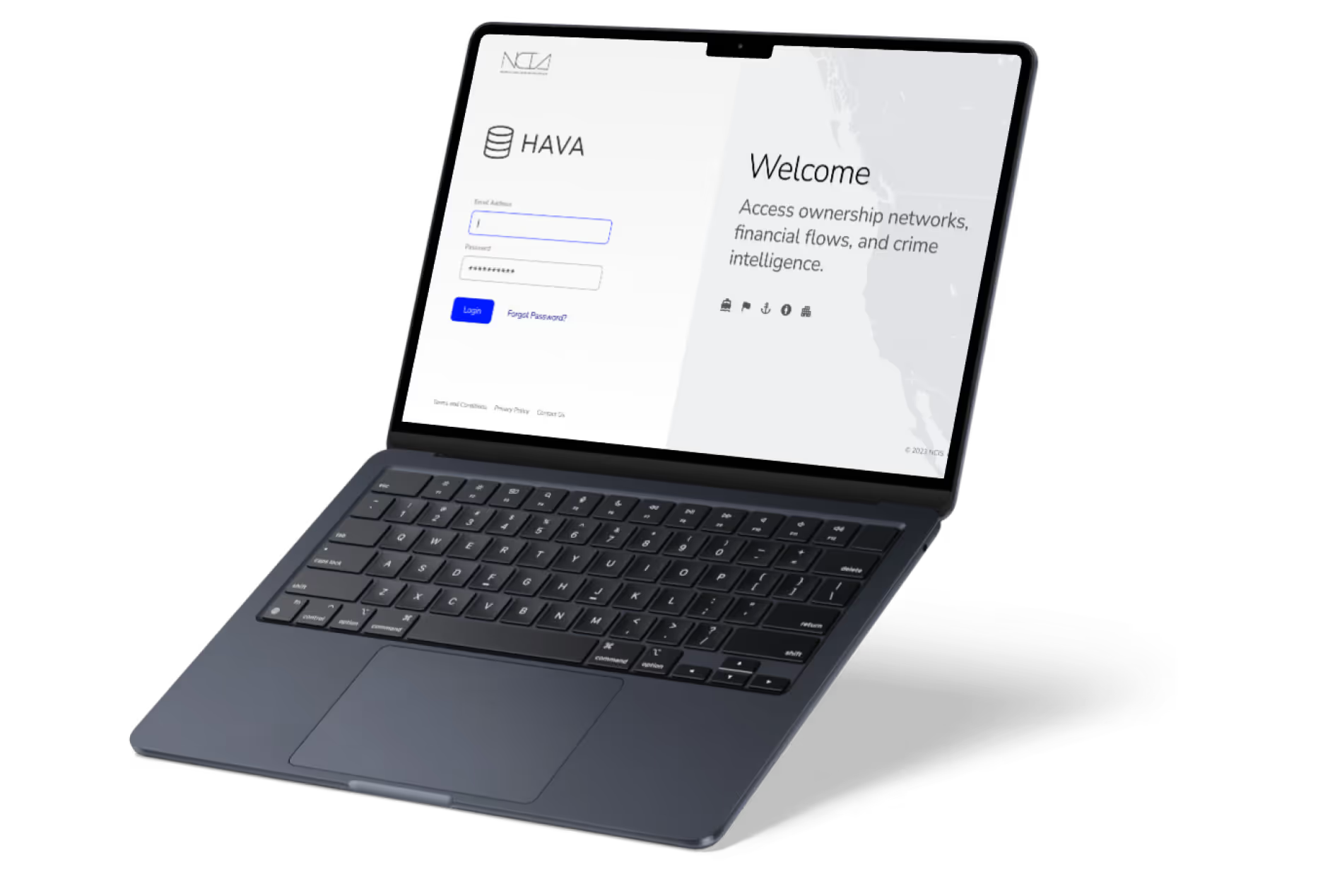
the brief.
National Crime Investigative Services builds technology for threat detection and intelligence, and faced an evolving global threat landscape that demanded real-time maritime situational awareness. The existing tooling was the obstacle: legacy systems to modernize, investigative workflows to streamline, and complex data from many sources that needed to come together into one platform, so international security teams could respond faster and act on clearer insight.
the challenge.
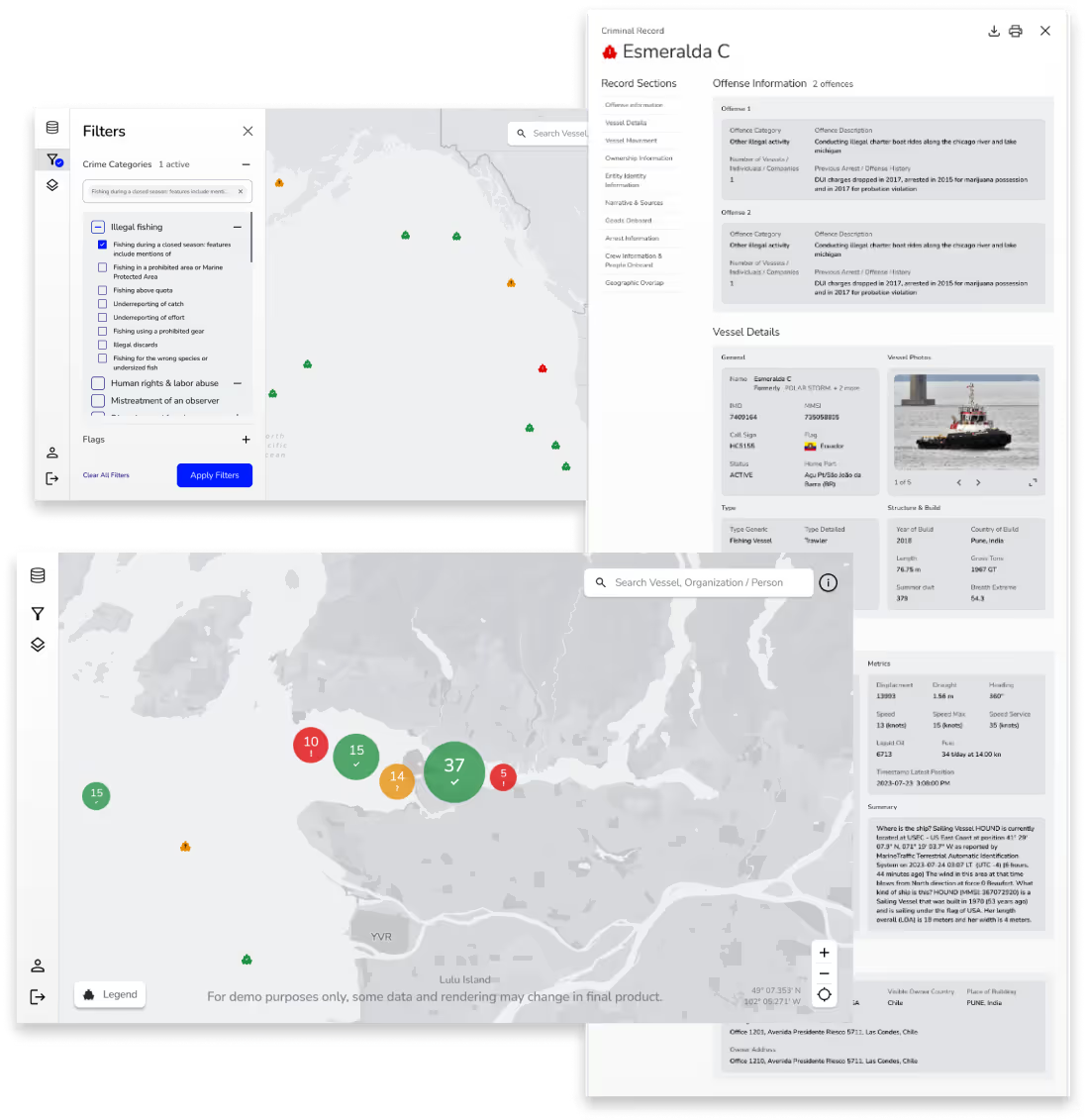
The pain was operational. Cumbersome, disjointed legacy systems slowed every investigation; data silos blocked a single coherent view of a situation; and friction at the decision point hurt both speed and accuracy when accuracy mattered most. The job was to remove the interface from between the analyst and the answer.
the process.
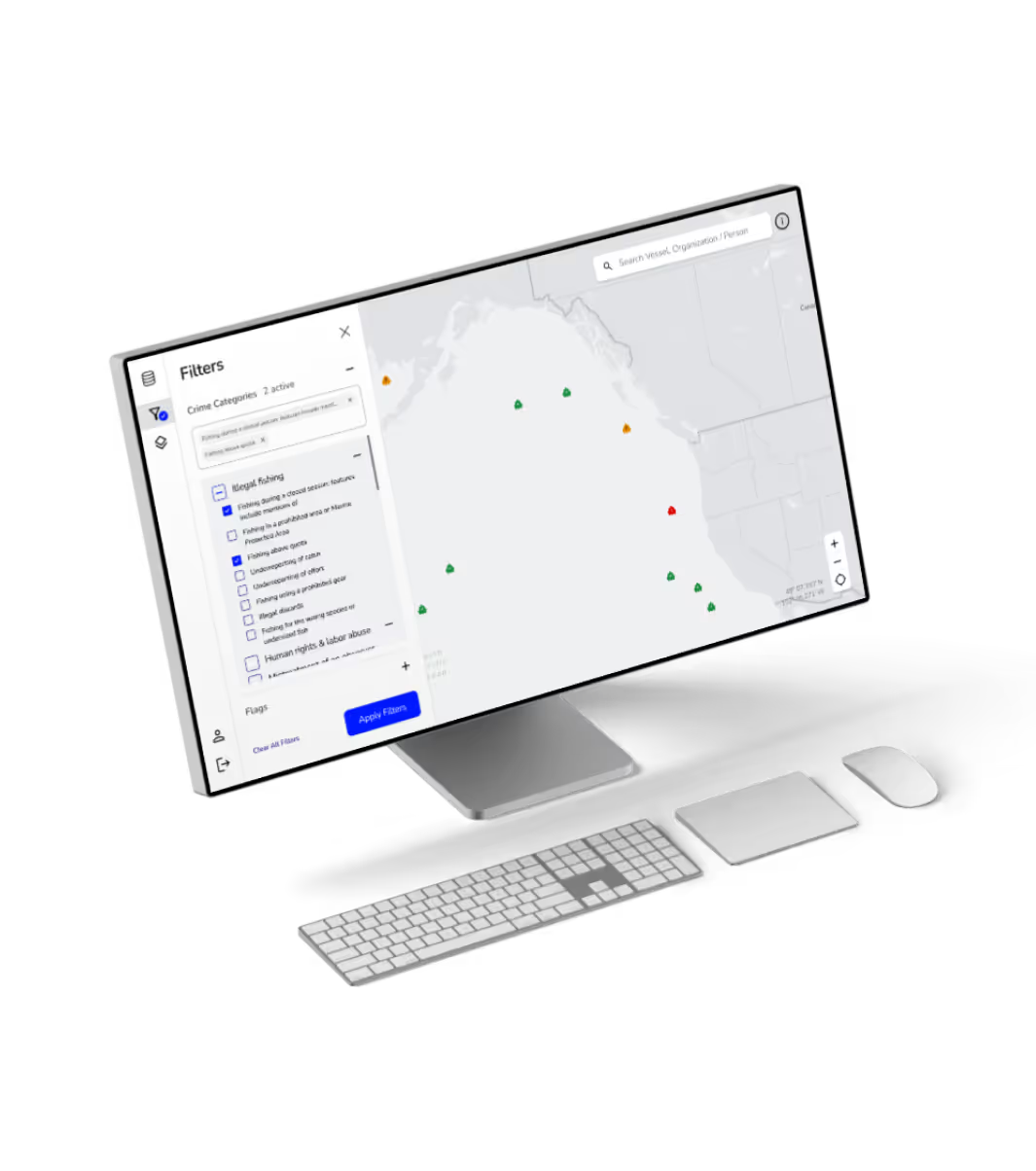
We ran in-depth user journey workshops with field agents and security analysts to understand the real moments of decision, then used a rapid prototyping sprint to test new workflows and interface concepts. The design work concentrated on simplifying data visualizations and streamlining the reporting process: the two places the old systems cost the most time.
the solution.
a unified, high-speed intelligence platform.
We brought disparate data sources into a single, centralized dashboard, with advanced visualizations, mapping tools, and real-time threat alerting to make intelligence immediately actionable. The platform was engineered for speed at scale (fast-loading interfaces even with large datasets) and built responsive and mobile-friendly so investigations can happen in the field, not just at a desk.
the outcome.
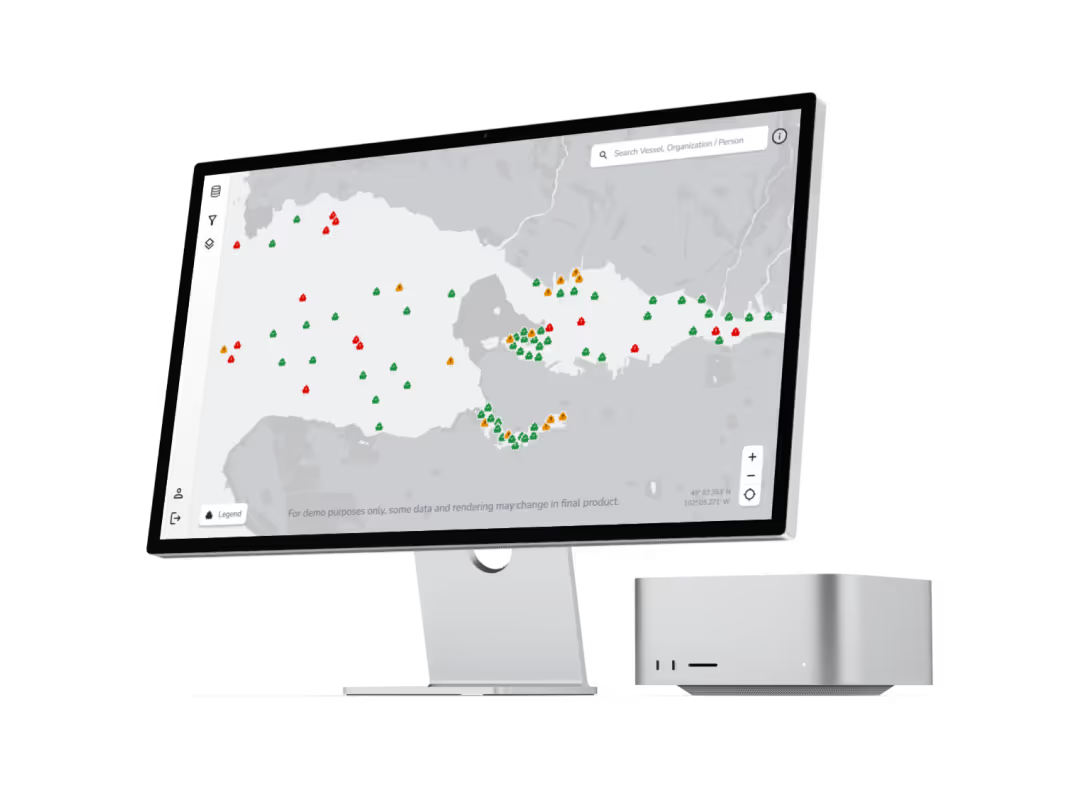
The platform is in production, consolidating previously siloed sources into one real-time view and accelerating investigative workflows and reporting across global maritime security operations, the interface no longer standing between an analyst and the answer.
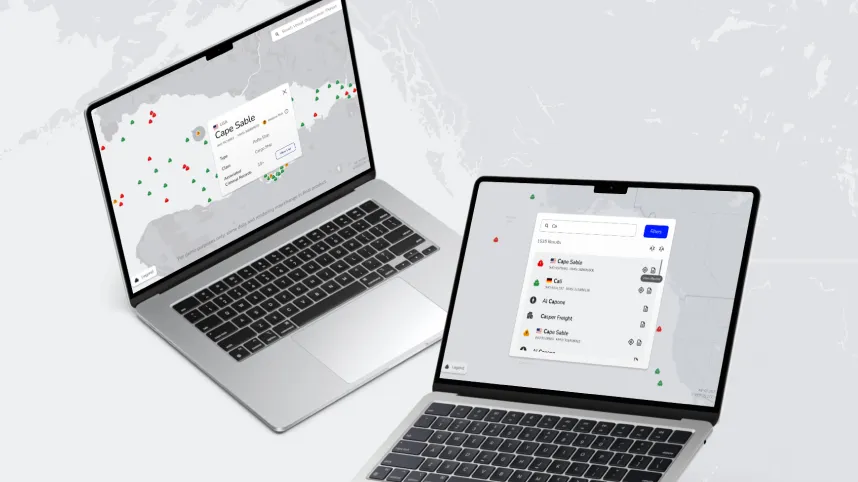
The threat map on watch: live on the bridge, where the decisions get made.
Hover to play