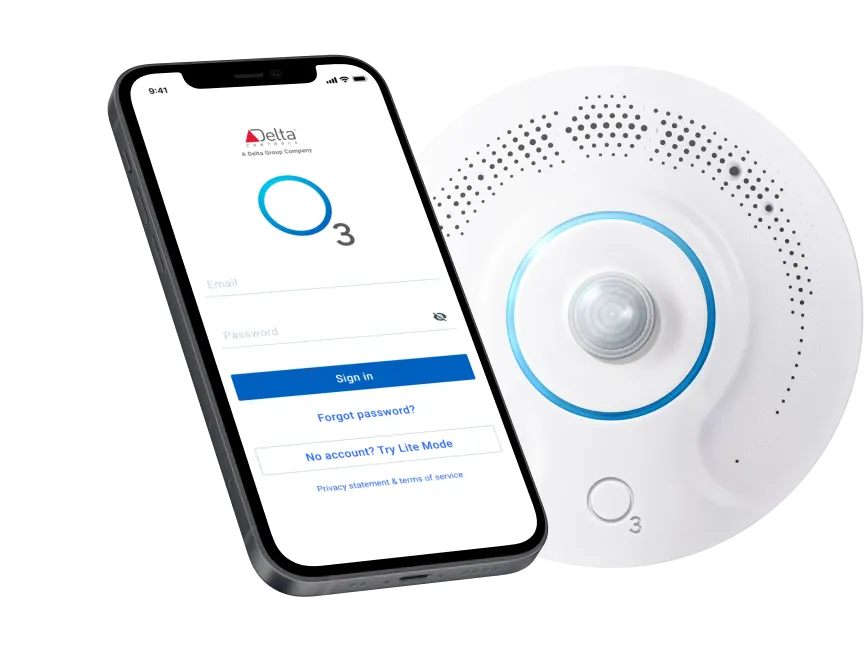
the brief.
Delta Controls is a leading control manufacturer helping industries manage surveillance, lighting, cameras, and occupancy sensing. Ahead of launching their O3 Sensor Hub 2.0, they asked us to build a planning and configuration experience that would cut the time installers spend on-site and make the system faster to learn.
The unstated stakes were bigger than convenience. Configuration meant an engineer at the device itself, often up a ladder, working a sensor hub mounted near the ceiling. Every minute spent up there is a cost, to Delta and to their customers. Reduce the on-site time, get the engineer off the ladder, and you change the economics of the whole product.
the challenge.
This was a hardware company stepping deliberately into software. The configuration experience had to be easy enough to compress training, robust enough to run in the field (including the dead zones where there's no connectivity) and architected to scale across future products, not just this one hub. Expanding from hardware into cloud-based software is a new business, not a feature.
the process.
We took a user-centric, design-thinking approach, working in co-design with Delta's team to build a robust Google Cloud IoT platform, chosen for the room it left to update and scale as the product line grew.
the solution.
a powerful web application.
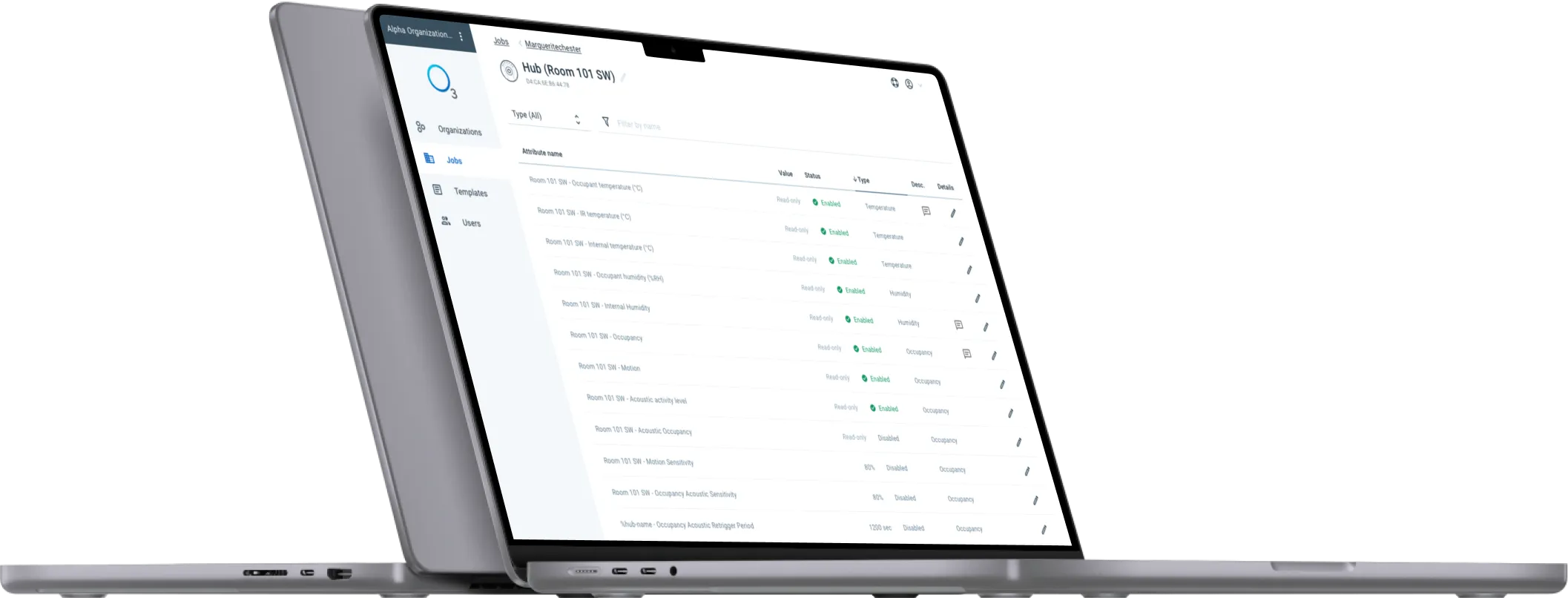
The web app lets engineers plan and configure O3 sensor hubs online, setting up and managing devices remotely instead of on-site. Everything created in the app is stored in the cloud; once hubs are connected, the platform delivers remote, real-time data insights and reporting.
configuration that survives the field.
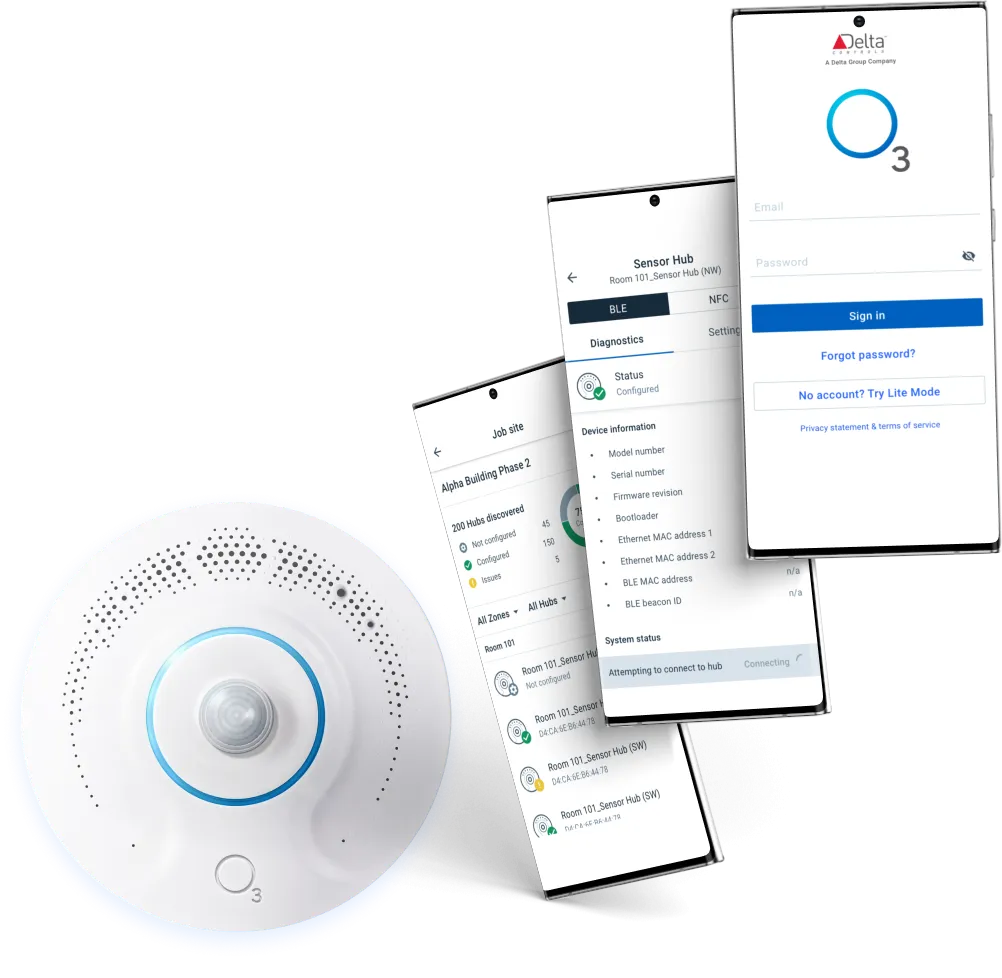
To handle on-site dead zones, the mobile app downloads everything it needs at login and lets the installer keep working offline, syncing to the cloud the moment data or WiFi returns. Installers can see which settings failed to sync and spot malfunctioning sensors through live, real-time readings from the device.
By moving from hardware into cloud-based software, Delta laid the foundation for a new business model: one built to shift and grow as the technology does.
For on-site dead zones, the app downloads everything on login and keeps working offline, syncing to the cloud on reconnect. Installers spot unsynced settings and failing sensors through live readings.
the outcome.
With the web app, engineers manage sensor hubs online, reducing configuration time threefold: what once took 5 minutes now takes 90 seconds. And the job no longer starts with a climb: setup that used to happen at the top of a ladder now happens from a browser. Minimizing engineers' on-site involvement means significant cost savings for Delta Controls and its customers.
The work was validated outside the building, too. Since launch, Delta Controls was awarded the Frost & Sullivan 2020 Global Company of the Year Award for its hub (the citation calling the O3 Sensor Hub 2.0 a new industry benchmark) and the platform won Best UX for Product at the 2020 Vancouver User Experience Awards.
The launch of the projects and the design phase has been impressive. Power Shifter is very strong at that, which a lot of others aren't.
Set up from the workbench: the O3 hub, configured before the climb.
Hover to play