the brief.
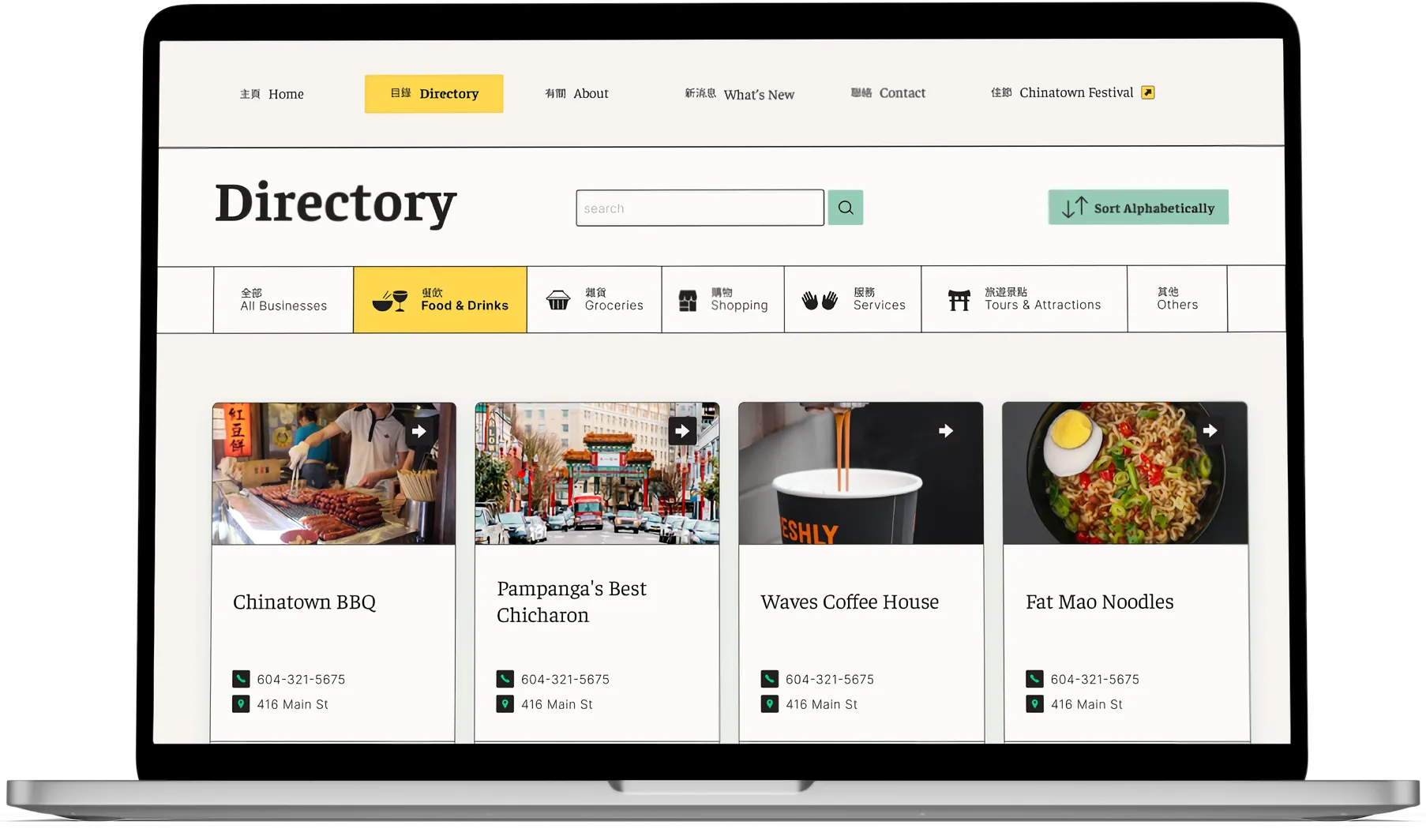
The VCBIA exists to encourage and promote business in Vancouver's Chinatown: one of the city's few distinct cultural historic neighbourhoods, and one where keeping track of openings, closures, and changes is genuinely hard. Their WordPress site had become the bottleneck: difficult to maintain, expensive to keep current, and the store directory (the single most useful thing the site could offer) was falling out of date.
A directory that's out of date is worse than no directory at all. Residents, business owners, operators, and visitors each needed something different from the site, and the BIA's team needed to serve all of them without a developer on retainer.
the challenge.
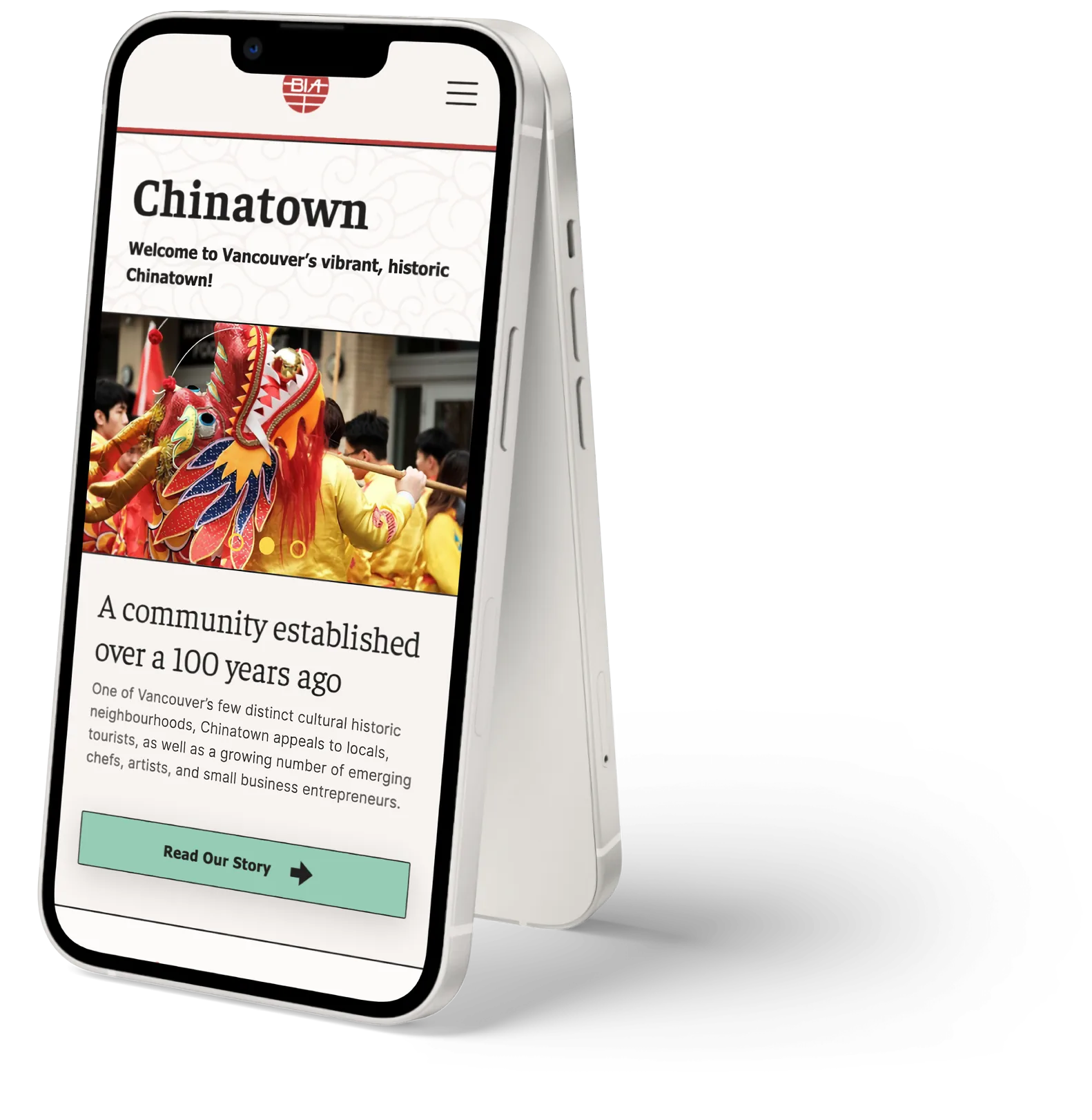
Three constraints shaped everything. Maintenance was the product: whatever we built had to be updatable by BIA staff, not by us: if the new site needed an agency to change a listing, we'd have rebuilt the old problem. The directory data itself was stale, so a redesign that re-skinned outdated information would fail on day one; the content had to be rebuilt alongside the platform. And heritage had to come without cliché: Chinatown's visual identity is everywhere in the neighbourhood and badly handled almost everywhere online, so the design had to express the district's character through its real, specific visual language, not stock chinoiserie.
the process.
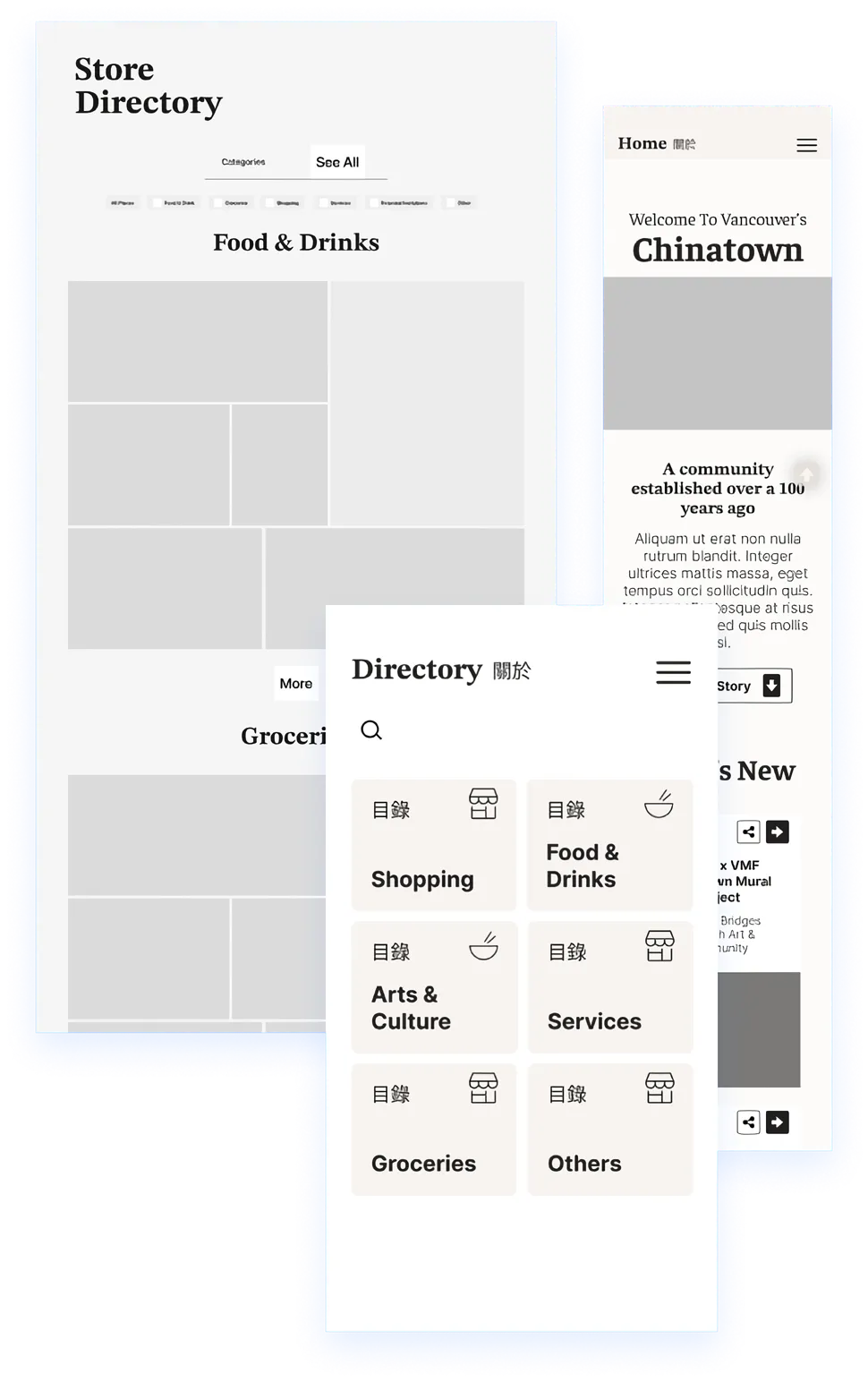
A four-phase, fixed-fee engagement. Kickoff and discovery (1 week): stakeholder interviews with VCBIA staff, an audit of the existing WordPress install and analytics, and a review of the store directory database to establish exactly what data existed and what had rotted. UX design (2 weeks): information architecture, site map, and user flows for the five-page scope (homepage, about, store directory, news, and contact) with directory data collection starting here, in parallel, not as an afterthought at launch. UI design (3 weeks): moodboards and style tiles to lock the look, then full Figma designs using local street signage as the site's wayfinding cue system, with a photographer on the team so the imagery was Chinatown as it actually is. Build and launch (3–4 weeks): Webflow build, domain connection, analytics, QA and UAT.
the solution.
a CMS a two-person team can run.
Webflow was the obvious choice: the brief practically named it. The core problem was maintainability, and Webflow's CMS meant BIA staff could update listings, post news, and manage content without touching code or calling us. We structured the directory as CMS collections, so adding a business is a form, not a development ticket.
a homepage that stays alive on its own.
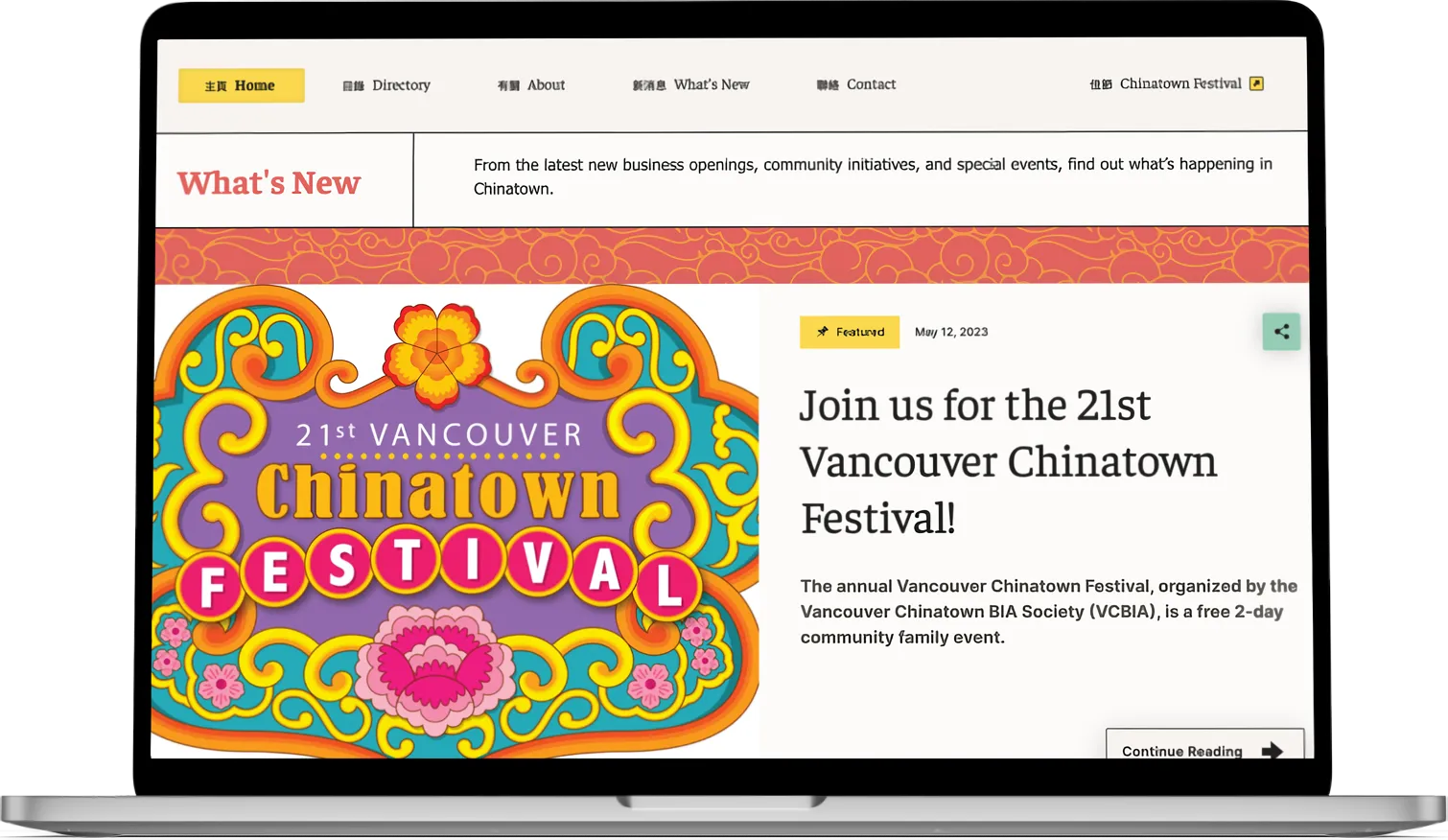
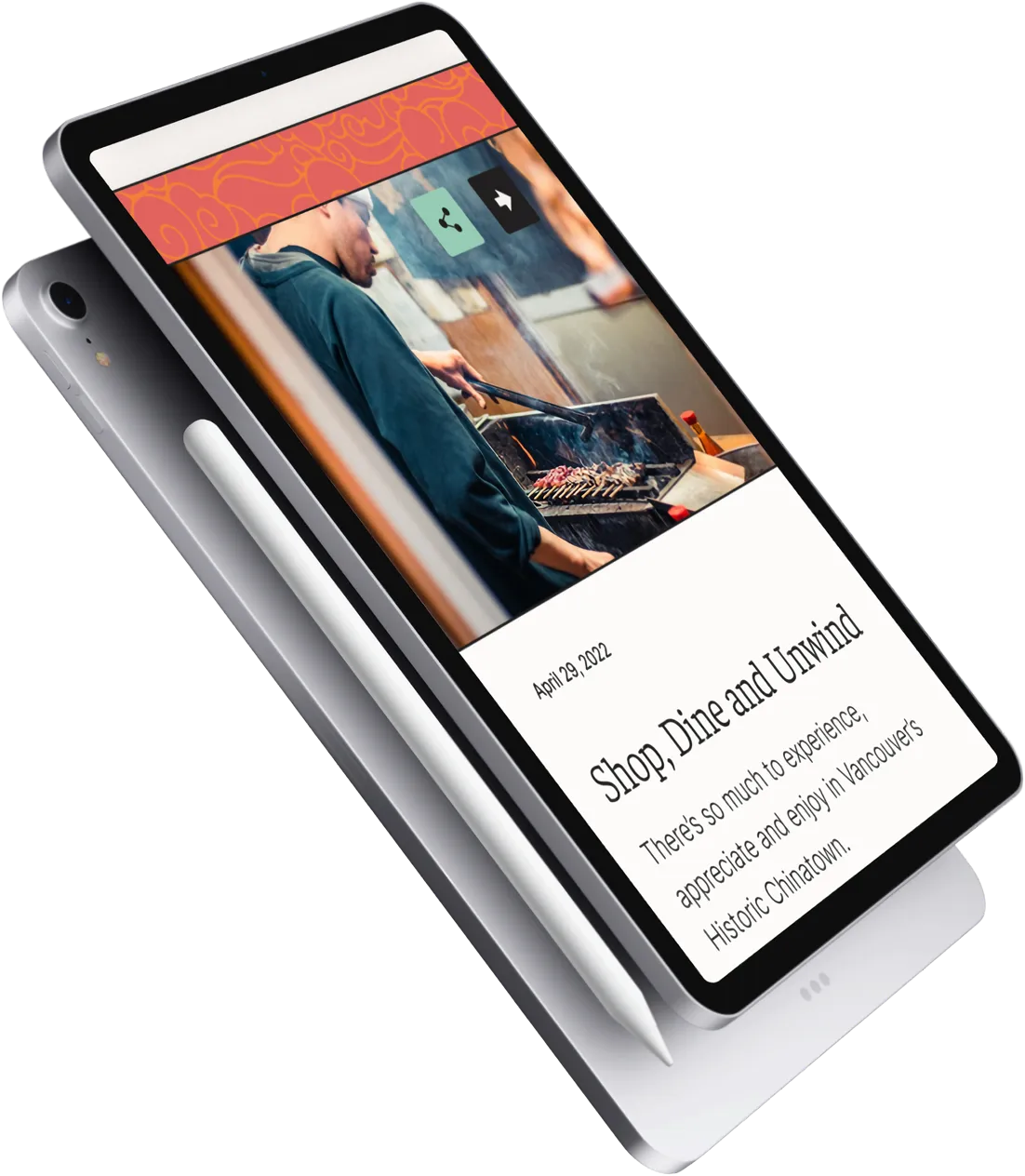
The homepage pulls featured posts dynamically, so the site reads as constantly active (new businesses, community initiatives, events) with as little manual upkeep as possible. Every design decision ran through the same filter: can two people at a non-profit keep this current?
the outcome.
The proof is on the domain today. Nearly four years after the mid-2022 launch, the site is still running on the Webflow build and still current (the What's New section carries 2026 content) and the BIA's team has expanded it well past the original five-page scope without us: a SafeWalk program page, graffiti removal services, a Chinatown Festival section, and a Shopify storefront, all added post-handoff. The site now runs bilingual English and Chinese navigation, and the directory is alive too, with new photographed listings added as recently as this year. The directory shipped with fully refreshed listing data, rebuilt during the engagement rather than migrated stale, and the WordPress maintenance burden (the reason the project existed) was eliminated structurally: there is no longer a class of update that requires a developer.
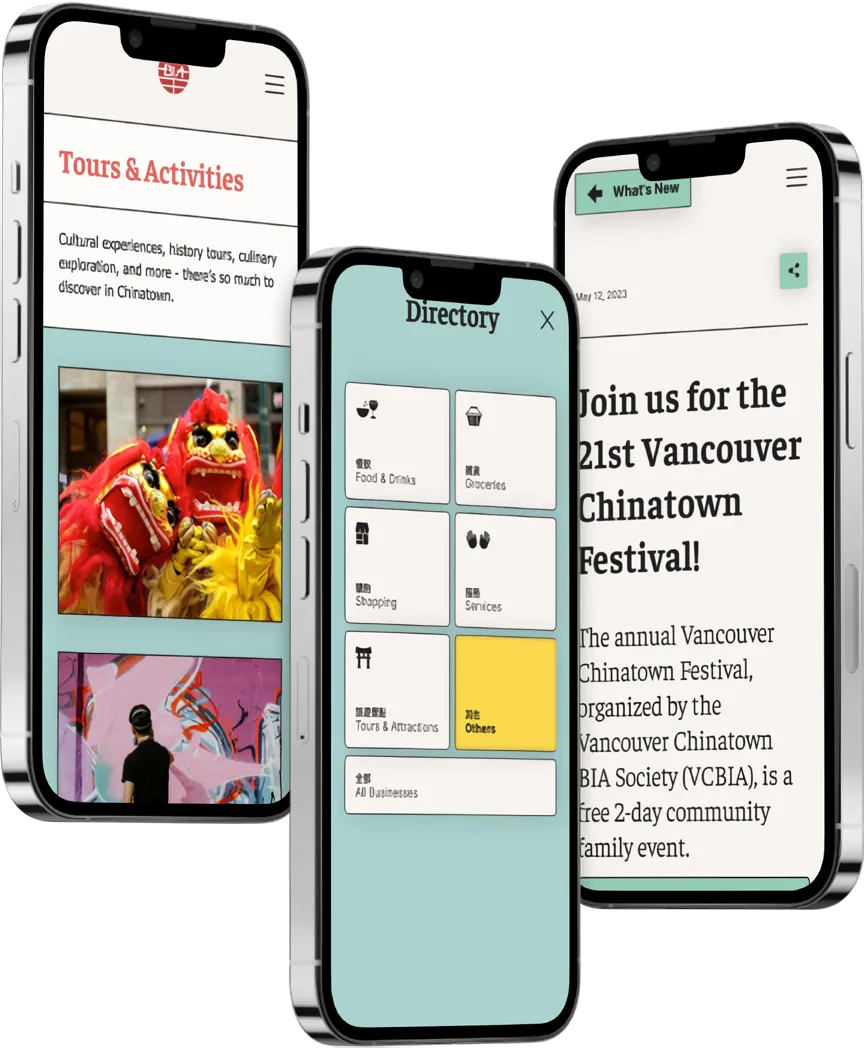
The directory in motion: Chinatown's businesses, browsable in English and 中文.
Hover to play